Our story
Your best people should be leading schools. Not chasing information.
Quilt brings together the experience of district leaders, K–12 operators and technology builders to take on the work between systems. So your team can spend less time assembling the picture and more time improving it.
Chapter one
The question is reasonable. The work behind it is enormous.
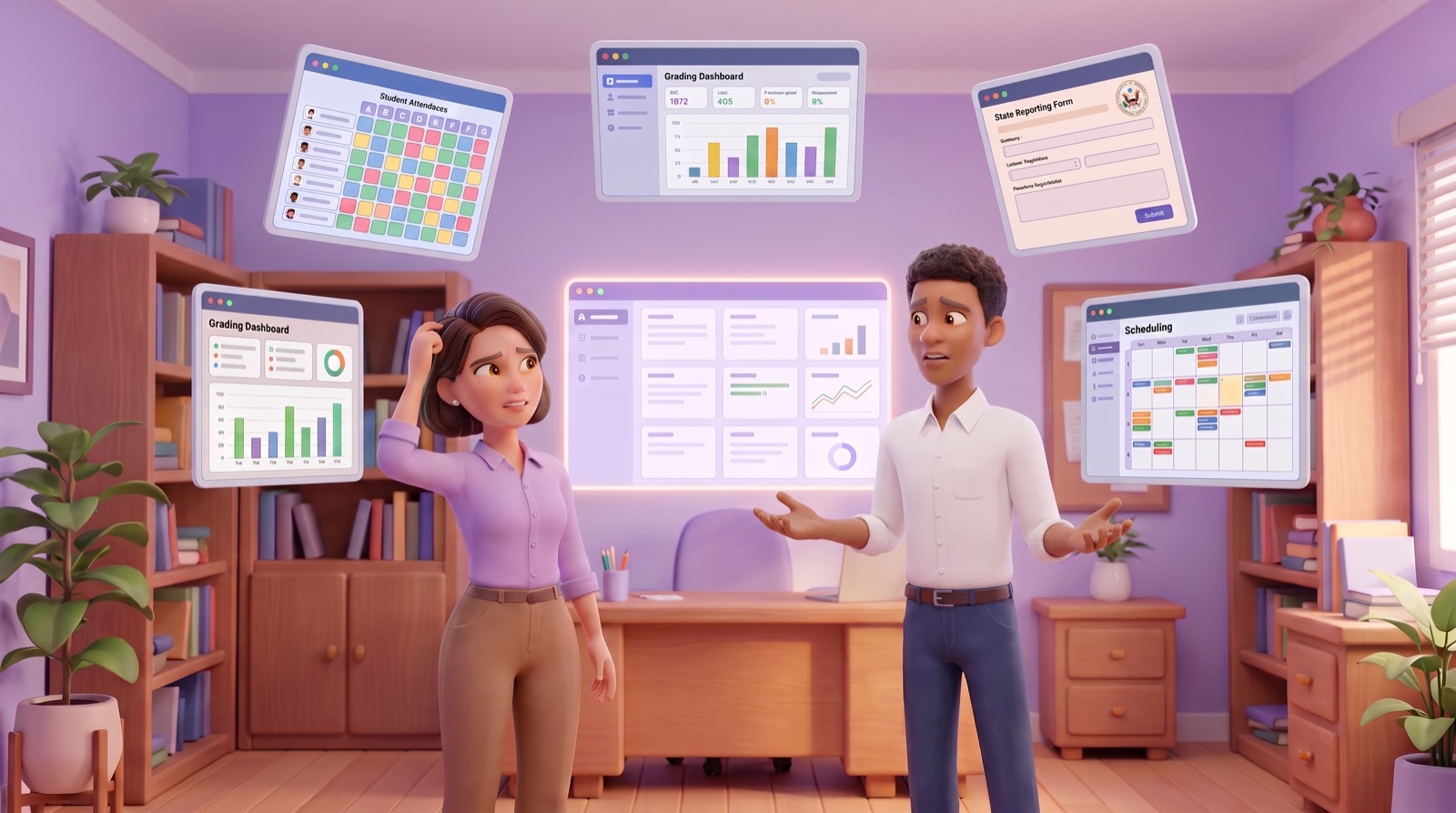
It’s Tuesday’s cabinet meeting. Sixth-grade math results are down. Before you commit to a new curriculum, you want to know a few things. Where did results change? Which students missed instruction? Were the interventions delivered? What was happening with staffing?
Each question crosses a different system, department or document. Your assessment platform has one piece. The SIS has another. Staffing records, intervention logs and school plans hold the rest.
So someone exports the files. Someone reconciles the school names and reporting periods. Someone finds the current plan. Your analysts fit the request around state reporting. Your principals explain what the spreadsheets leave out.
The work is essential. It’s also work your team has to repeat for the next budget question, board brief, student-support meeting and improvement plan.
You’ve invested in systems to run the district. Your people are still doing the work of connecting them.
And while the evidence is being assembled, decisions keep moving. Budgets close. Meetings happen. Students keep coming to school.
We started Quilt because the people responsible for improving schools deserve a better way to do this work.
Your team’s judgment is too valuable to spend on work the technology should be doing.
Chapter two
Built from both sides of the district table.
Quilt brings together district leaders and operators with people who’ve built and scaled K–12 assessment, curriculum, analytics and student-support technology. Our work is shaped by decades of experience with the decisions districts make and the systems they depend on.
That combination matters. Understanding a data model isn’t the same as understanding a district. A staffing question can depend on enrollment projections, position control and a bargaining agreement. An attendance number means little without the reporting period and the district’s definition. A compelling pattern still isn’t proof of what caused it.
We understand why a superintendent asks a second question before taking a number to the board. Why a principal needs the student’s history, not just a flag. Why a technology leader needs to know exactly what an agent can access before connecting it.
Those realities shape what we build. Agents that can work with district evidence, use the right context, show their sources and make the limits of an answer clear.
We’re building Quilt with district leaders because the test is what happens in their working day. Does the team have what it needs for the meeting? Can it check the evidence? Does the work move forward?
Chapter three
Give your team a head start on the work that matters.
Quilt is the infrastructure for K–12 AI agents. It connects to your existing systems, retrieves the information a task needs and brings in your district’s policies, plans and definitions. Your district controls who can access what and which tasks agents can perform.
On that foundation, purpose-built K–12 agents help analyze results, monitor changes and prepare the work your team needs next. A board brief, an attendance follow-up list, an IEP preparation packet or an update against your LCAP goals.
The agents are shaped by district leadership and operating experience. The infrastructure gives them the connections, context and controls to put that experience to work in your district.
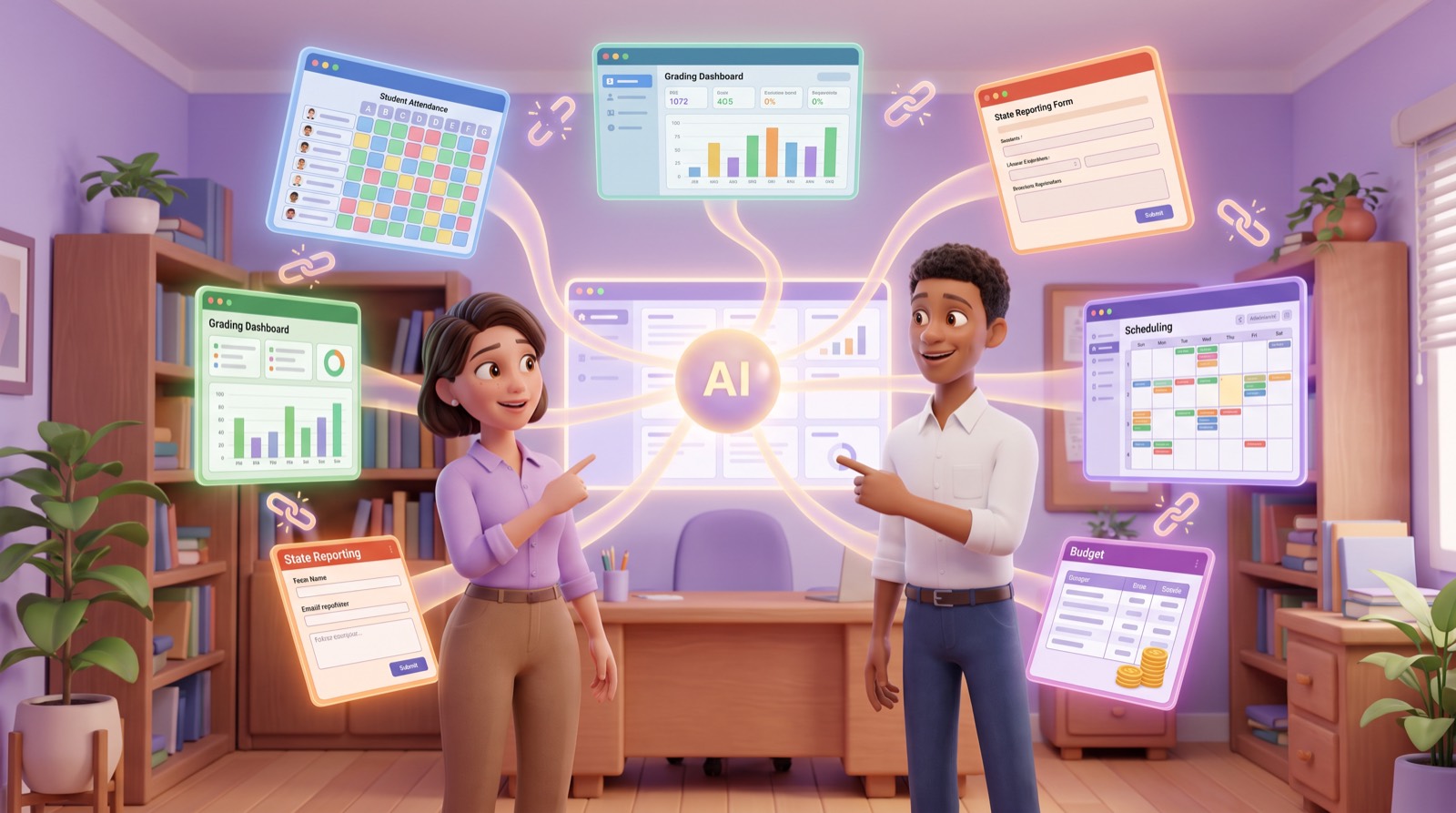
You shouldn’t have to move everything into a new data warehouse to get started. Quilt works with the systems you already use, and the same foundation supports prebuilt agents and custom workflows.
The payoff is practical. Your team starts with evidence and a useful draft, ready to check, refine and use.
A principal starts the student-support meeting with attendance changes, intervention history and follow-up questions already assembled.
A business leader brings enrollment and staffing records into the same discussion, with discrepancies identified and sources at hand.
A superintendent turns a board question into a draft brief with the findings, supporting evidence and questions still to resolve.
A teacher connects a gap in class assessment results with relevant district-approved resources for the next lesson.
Each task builds on the same district context. Your goals, policies and definitions can inform the work across departments, instead of being rediscovered for every request.
Chapter four
The pieces are already yours. Quilt helps them work together.
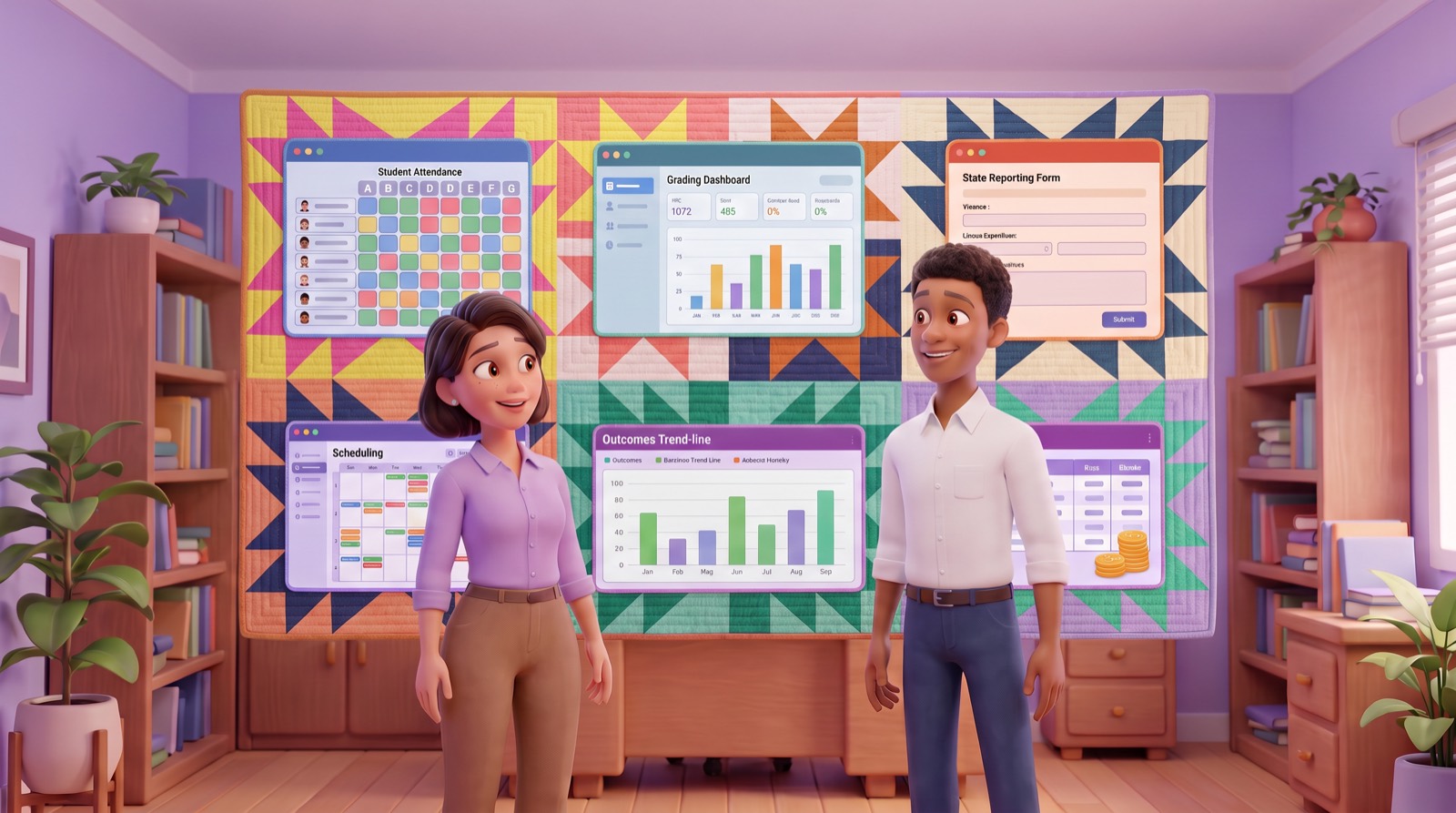
The name reflects how we think about districts. Your systems, plans, people and institutional knowledge each hold something valuable. The opportunity is to connect those pieces so they can inform the work together.
- Build on what you have.
- Your district has already invested in systems and developed ways of working. Quilt connects to that foundation and retrieves what a task needs.
- Keep the sources visible.
- A useful answer should stand up to questions. Your team needs to see the supporting records, understand the calculation and know where evidence is missing.
- Respect each person’s role.
- A teacher, principal and district leader need different views of the work. Shared infrastructure should support those differences through district-controlled access.
- Keep students in view.
- The point of a faster report is what it makes possible. A better-prepared team, an earlier conversation, a more informed decision about how to support students.
Quilt’s job is to make the connections useful, so the people doing the work can focus on what comes next.
Connect the pieces. Strengthen the whole.
How we build
Trust is part of the work. We build for it.
Your district sets the boundaries.
Connections, permissions and approved tasks belong at the foundation. Adding an agent should build on those controls.
Evidence before confidence.
An answer needs supporting sources and clear limits. When records are missing or a pattern doesn’t establish a cause, that should be visible.
People make the decisions.
Agents can gather evidence and prepare work. Your staff bring the judgment, relationships and responsibility that decisions about students require.
Commitments in writing.
Data use, access, retention and responsibilities should be clear in the agreement. Your team should know what it’s approving.
A foundation that can evolve.
AI models will change. We’re building Quilt so district connections, context and controls can support that change without starting over.
Proof in your actual work.
We’re early. We’ll be clear about what’s available, what needs configuration and what’s still being built. The next step is to examine a real task together.





Bring the work you wish your team had more time for.
A board question. A recurring report. A student-support meeting. In a walkthrough, we’ll work through what the task needs, what Quilt can prepare and how your team stays in control.